
An Introduction to the Roadmap
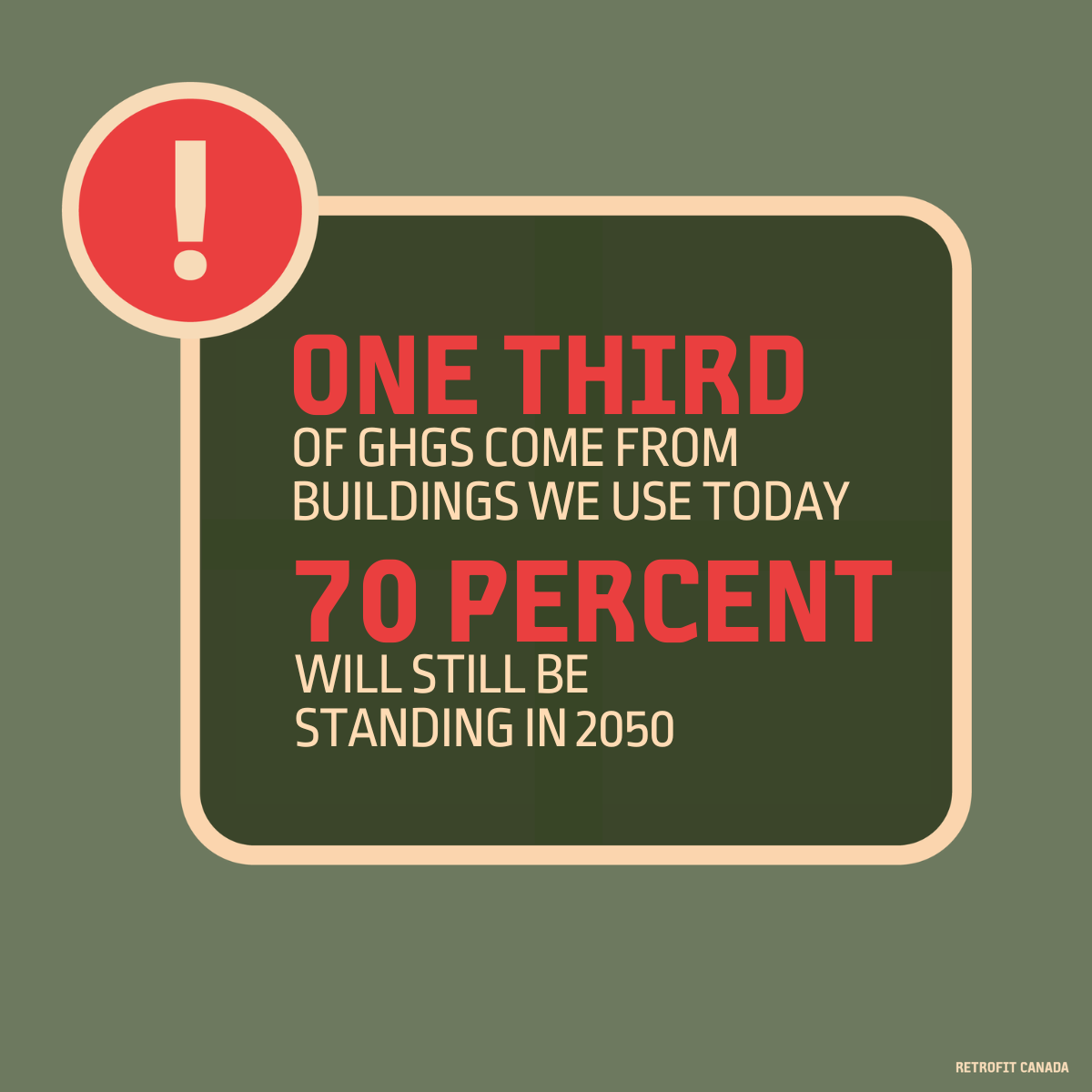
About one-third of greenhouse gases come from the buildings we use today, and by 2050, 70 per cent of these buildings will still be standing. We can’t address climate change just by building all new buildings net-zero. We need to make the 15 million homes Canadians live in right now net-zero to preserve a livable climate. Deep Retrofits are the solution.
A deep retrofit prepares an existing building for a net-zero, emissions-neutral future. With the right blend of mechanical and envelope improvements, a deep retrofit can reduce a building’s energy needs so much that it can get all of its energy from emissions-neutral, renewable sources.
Deep retrofits planned using this Retrofit Roadmap are the best way to get there while also incorporating many of the side benefits that are usually missed with piecemeal planning.
Those benefits include:
- Lower ongoing energy costs
- A brand new look with higher resale value
- A more durable building with very low ongoing maintenance
- Luxurious comfort all year round
- Healthier, fresher indoor air, even during wildfires
- Resilience in extreme weather events
- Power-efficient design that electrifies heating without kicking the can down the road, avoiding peaks that risk overloading the grid.
The upfront (or embodied carbon) emissions associated with new construction are one of the major contributors to climate change. Retrofits can avoid these emissions (by not demolishing and rebuilding in the first place) and reduce them even further by paying close attention to choices of the materials and processes.
Deep retrofits are still in their early days. The road to net-zero can be a complex technical and financial challenge. We are still learning. Relatively few contractors and consultants have completed net-zero-ready retrofits. The few successful examples of residential deep retrofits have generally been the result of a lucky coming together of enlightened owners and committed builders, and consultants with net-zero or passive house training.
This Retrofit Roadmap draws on the lessons learned by these pioneers to help building owners, contractors, and residents get their buildings to net-zero as affordably as possible.
Types of Retrofits
A deep retrofit done right would typically make a building 50 to 70 per cent more efficient and reduce CO2 emissions by almost 70 per cent. There are different approaches to making your home energy efficient. Still, the goal should be to make the building net-zero-ready, which means it can get all its annual power from emissions-neutral sources like solar energy.
Deep retrofits range from mechanical-only to those where only the envelope needs upgrading. Most will be a combination of both. The divisions can be a little blurry, but the following outlines four broad categories and their associated building types.
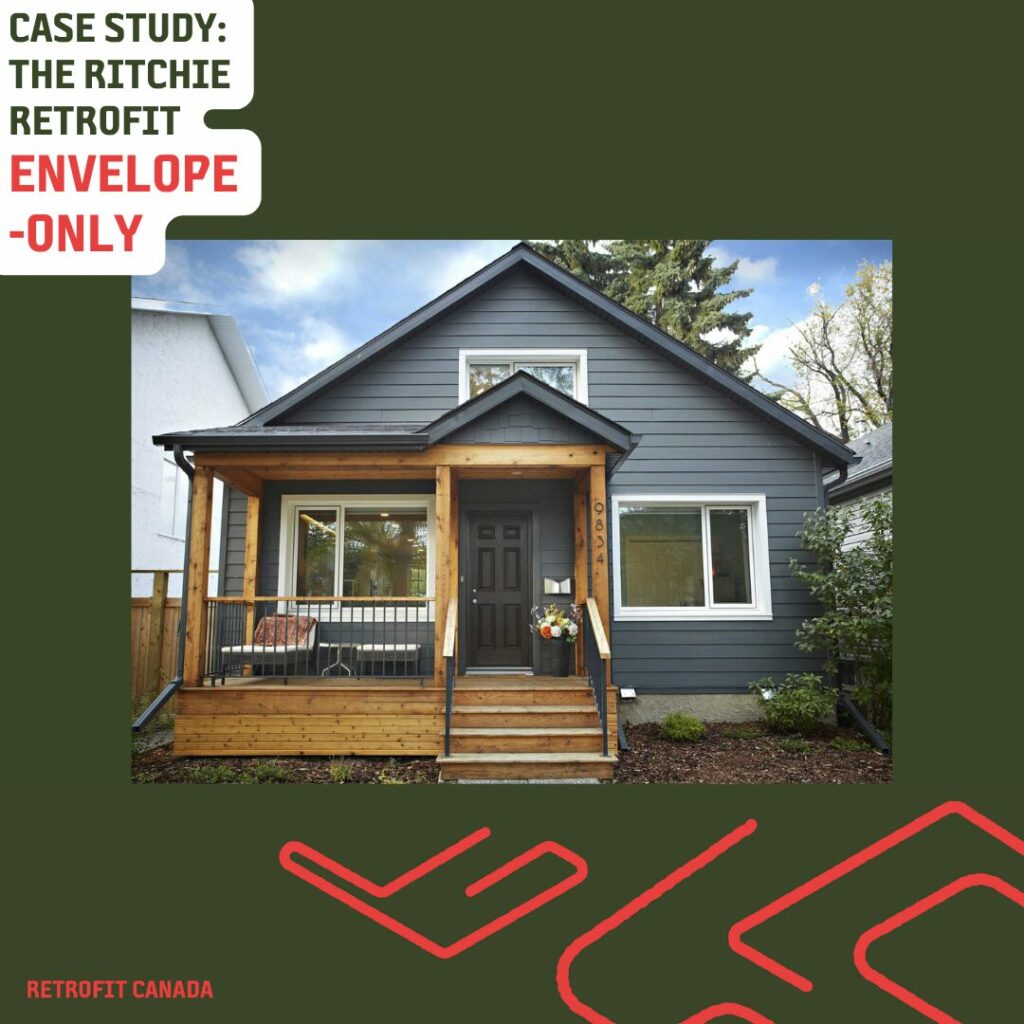
Envelope-only
For buildings that are already electrified but need envelope upgrades to reduce annual demand and peak consumption, or that plan to electrify in the future.
Major envelope and mechanical upgrades
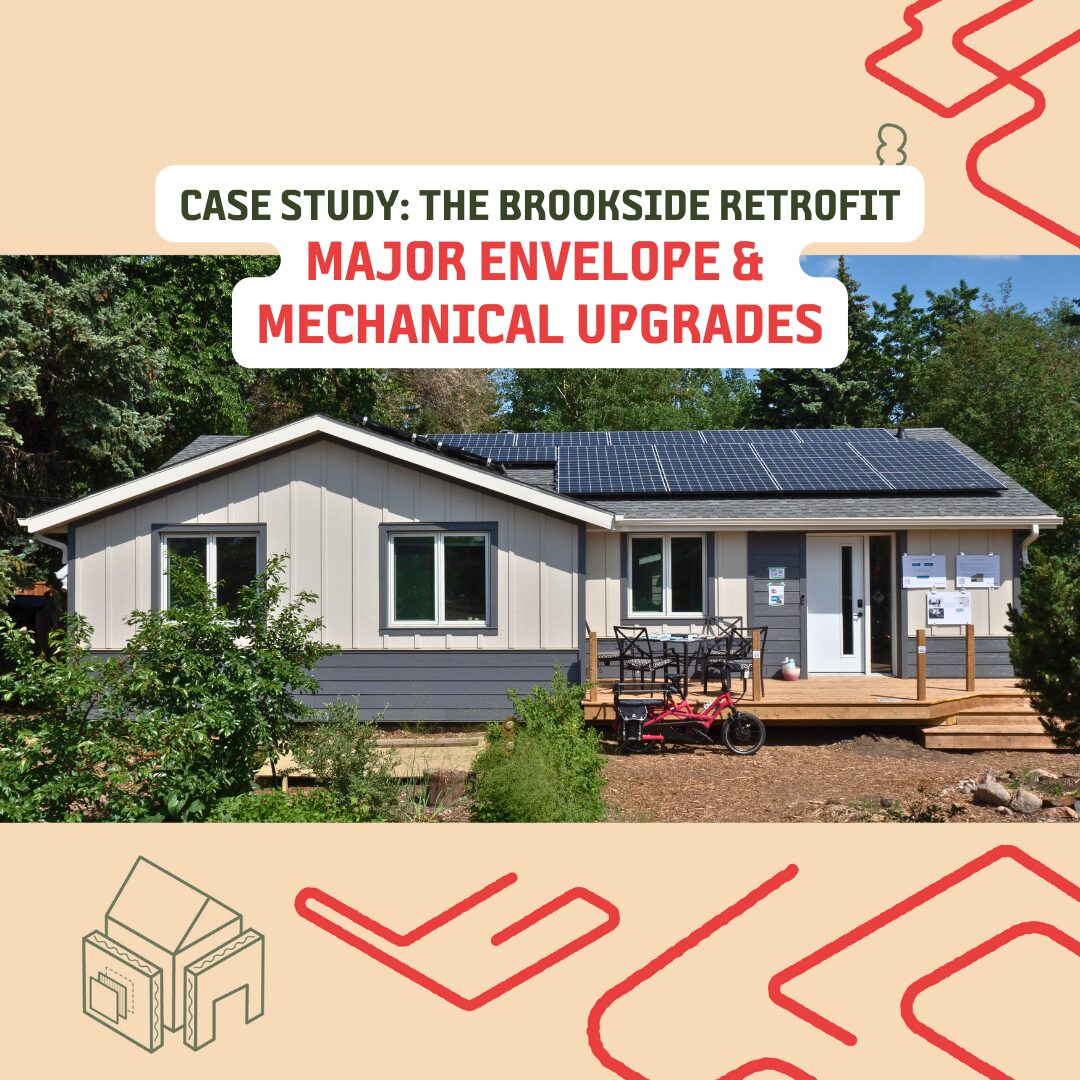
For buildings requiring substantial envelope upgrades to get annual demand and peak consumption low enough to make electrification possible.
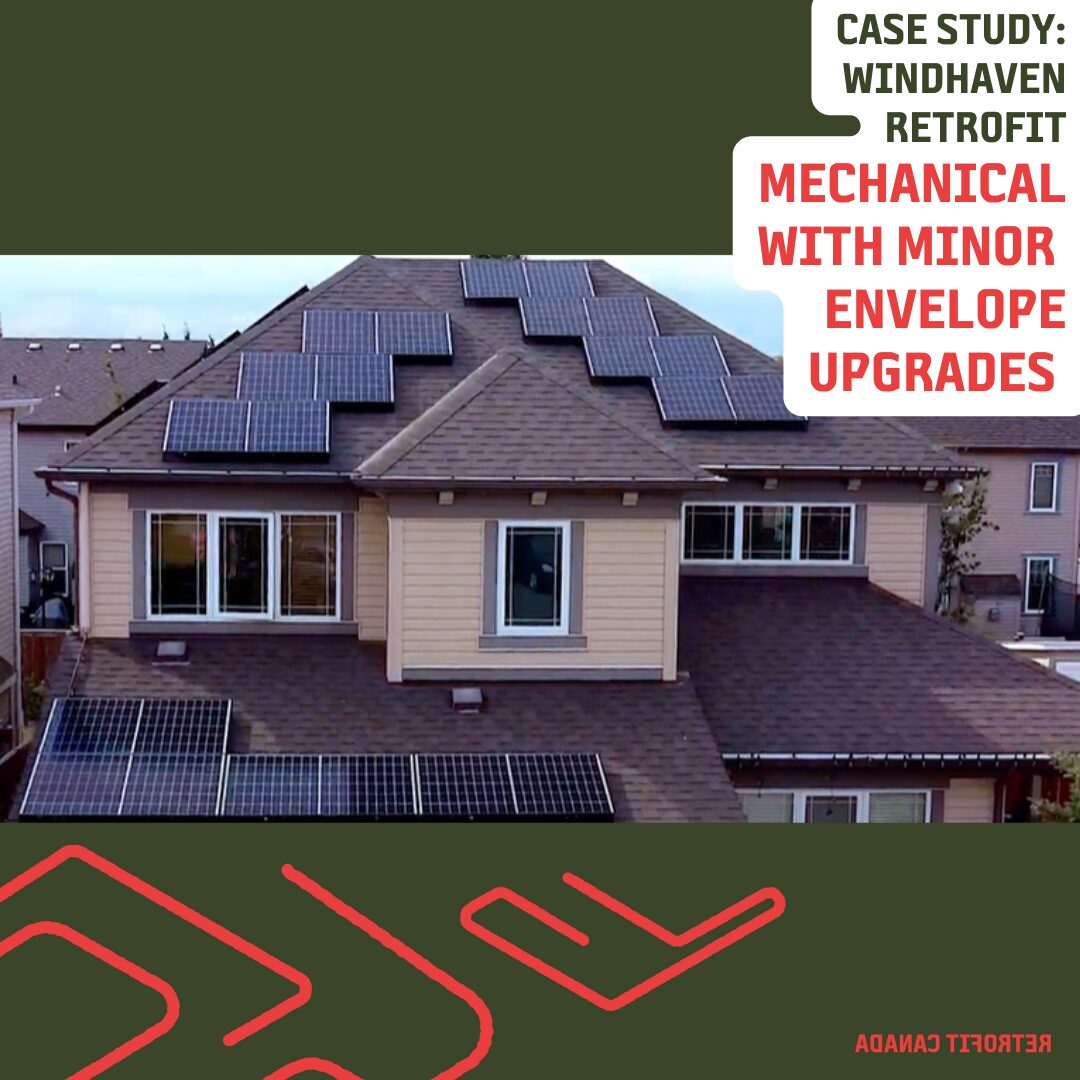
Mechanical with Minor Envelope upgrades
For buildings that are already reasonably energy efficient and can be electrified with only modest upgrades by installing heat pumps and electrifying hot water.
Typically, these buildings have newer exteriors that would be costly to replace just for energy savings, especially considering the modest energy savings from doing so.
Mechanical only
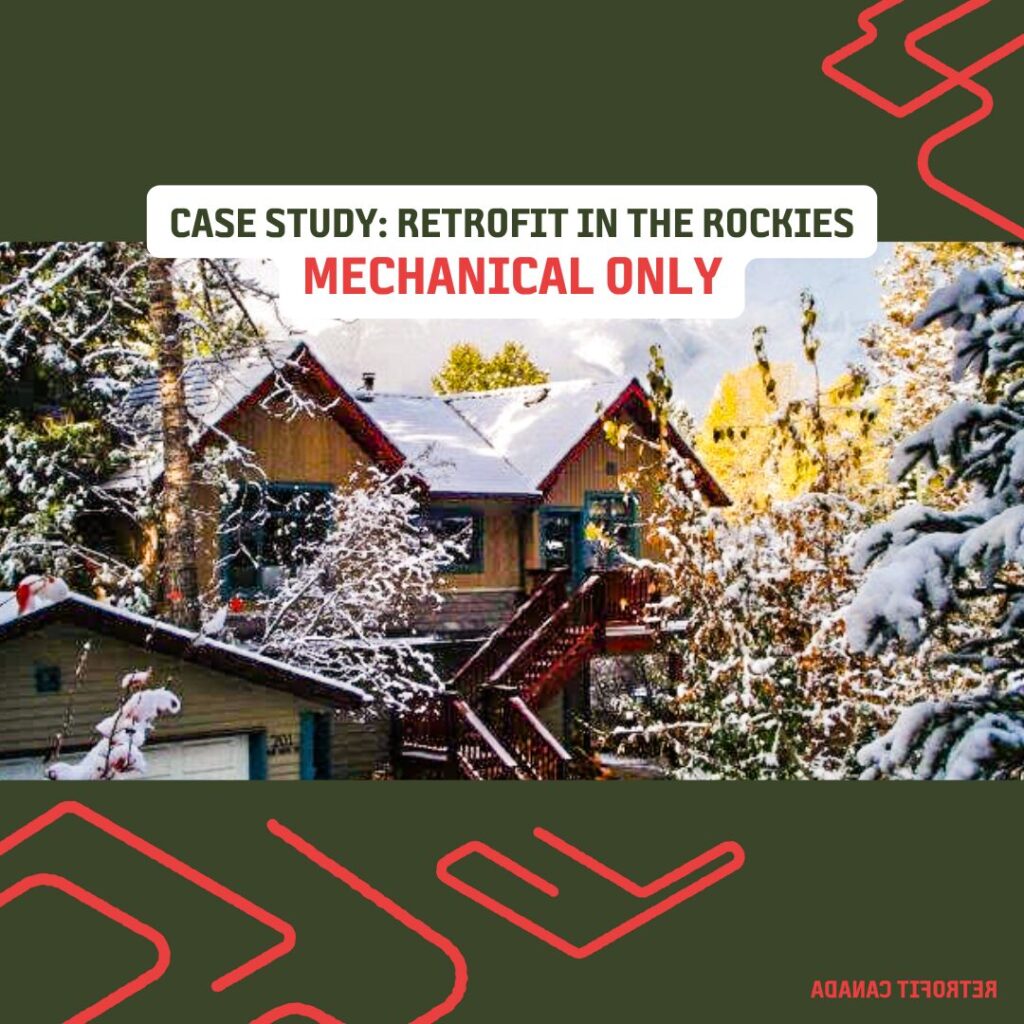
For buildings that are already efficient enough to be electrified with heat pumps.
These options are on a continuum that helps narrow the choices based on each building’s specific qualities.
Phased Retrofits
While a deep retrofit as a single project is usually more efficient and less expensive, this may be financially out of reach for some homeowners. If this is the case, a phased retrofit with a clear plan to become net-zero-ready is an excellent option.
A phased retrofit uses the same deep retrofit roadmap–a building assessment and energy audit to determine the best net-zero version of the building based on its current condition. Then, work is planned to be executed in stages designed to get to net-zero-ready in a way where everything done is part of that net-zero solution, and nothing is done that makes any of the remaining steps any harder.
A phased retrofit may cost more than doing it all at once but has the advantage of spreading out work and associated costs over time.
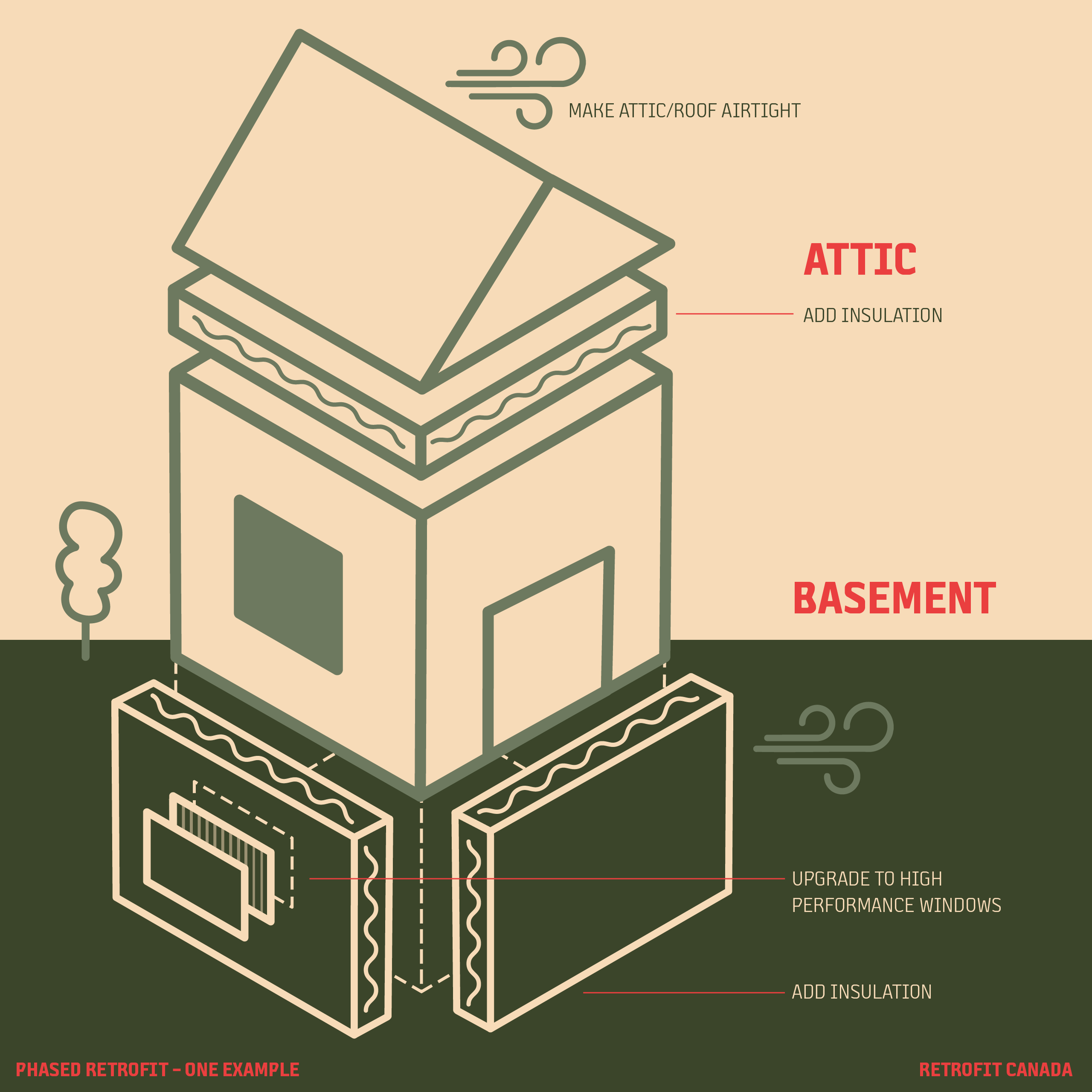
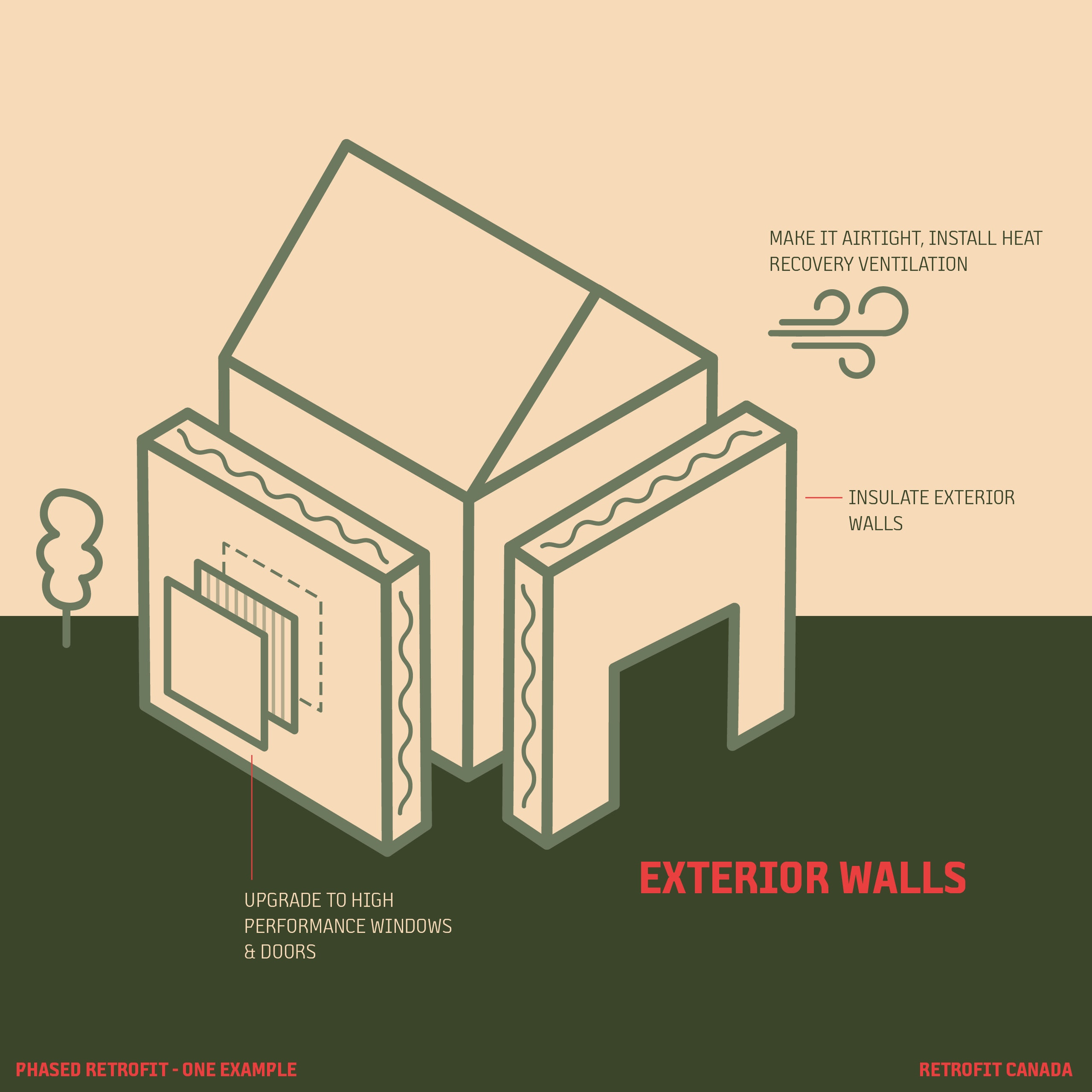
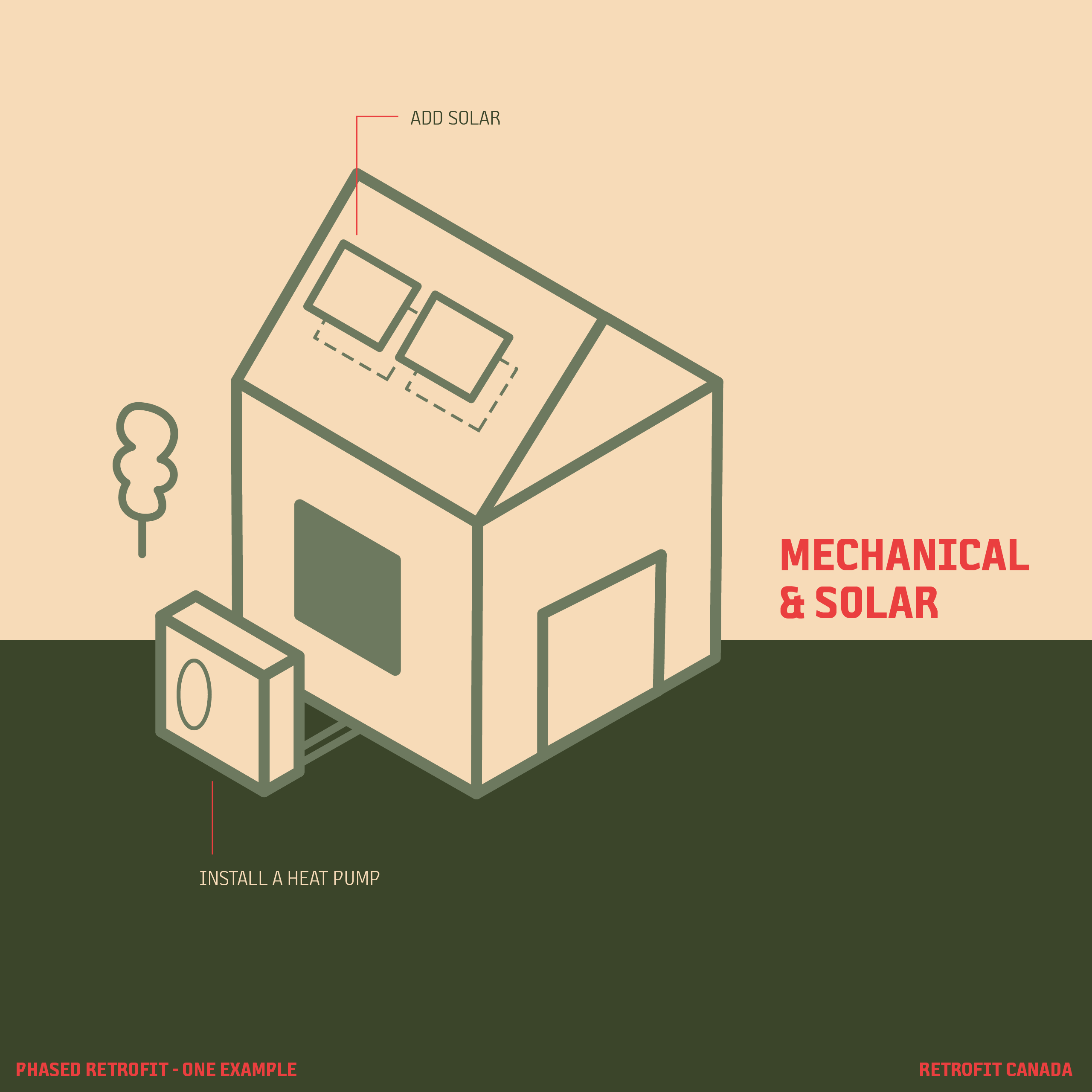
The following graphics are just examples of phases that may comprise an effective, net-zero deep retrofit. Every building is different, so it is always important to plan your phased retrofit with an experienced professional.
Real-world example of a phased retrofit
The Southeastern Ontario case study in the Retrofit Canada library is a good example of an effective phased retrofit that puts the home on the path to net-zero-ready.
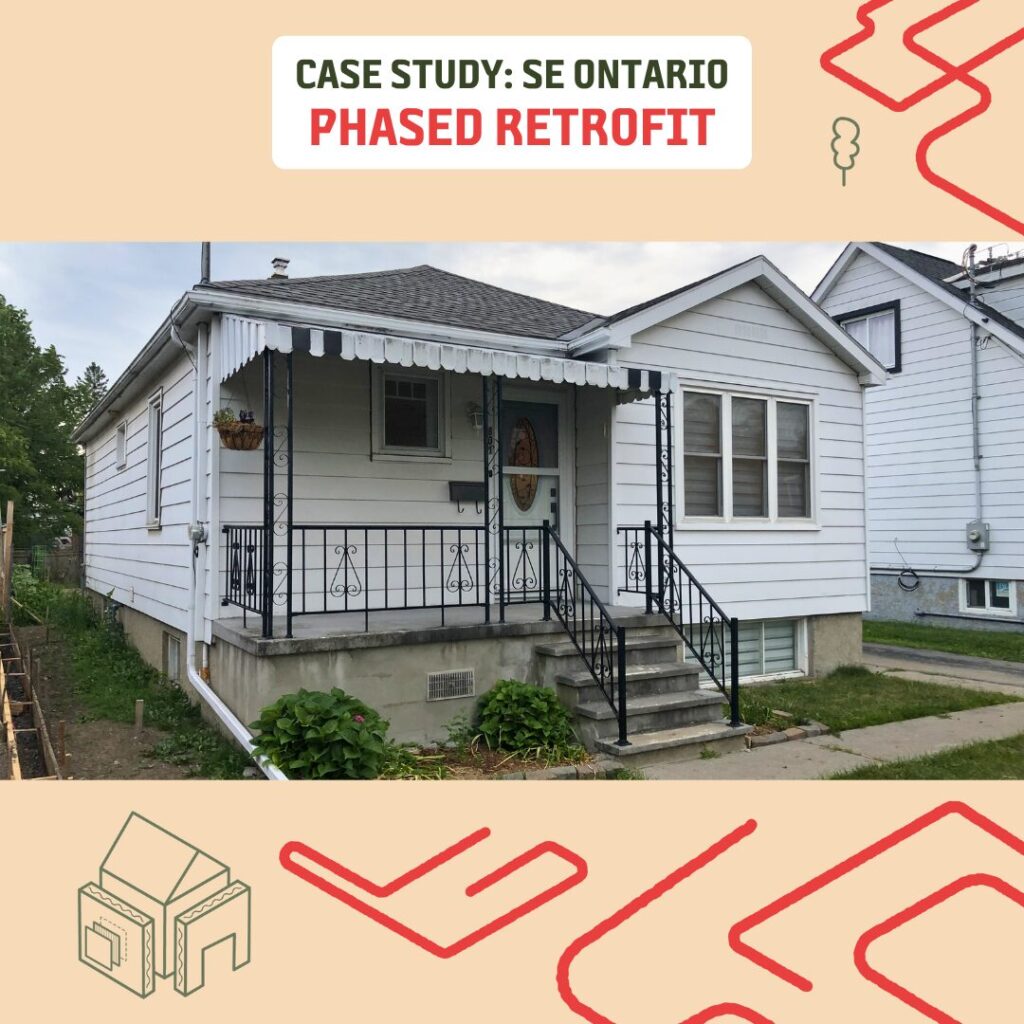
The homeowners couldn’t afford to do it all at once, but the basement was leaking and needed new weeping tile soon. The basement was also a big chunk of their total heat loss. That became Phase 1. It was easy to install the insulation while the weeping tile excavation was open. They also installed new energy-efficient basement windows, ran the insulation right up to the rim joist, and capped it off with a temporary flashing. The basement was done and would never need to be touched again.
Phase 2 would be the attic. It had very little insulation, and most of what was there was vermiculite, which contained asbestos. They got the vermiculite removed professionally, and while the attic was clean, they removed the old block chimney to provide a path for future HRV exhaust ducting, which was also run from the bath and kitchen. They also added a conduit for future solar PV. Then they sealed all that in with a continuous layer of spray foam to make the attic airtight and topped it off with enough cellulose insulation for eventual net zero ( about R60 total). No need to go up there ever again.
This is the kind of thinking needed for a phased retrofit that makes the building net-zero-ready.



