Project Description
The Retrofit Story
This homeowner approached this retrofit with the aim of reducing energy consumption and saving energy costs, improving the thermal comfort of their home, and reducing their GHG emissions. Following energuide assessment recommendations, they decided to increase the insulation on their exterior walls and then, once the heating load was reduced, electrify their heating equipment.
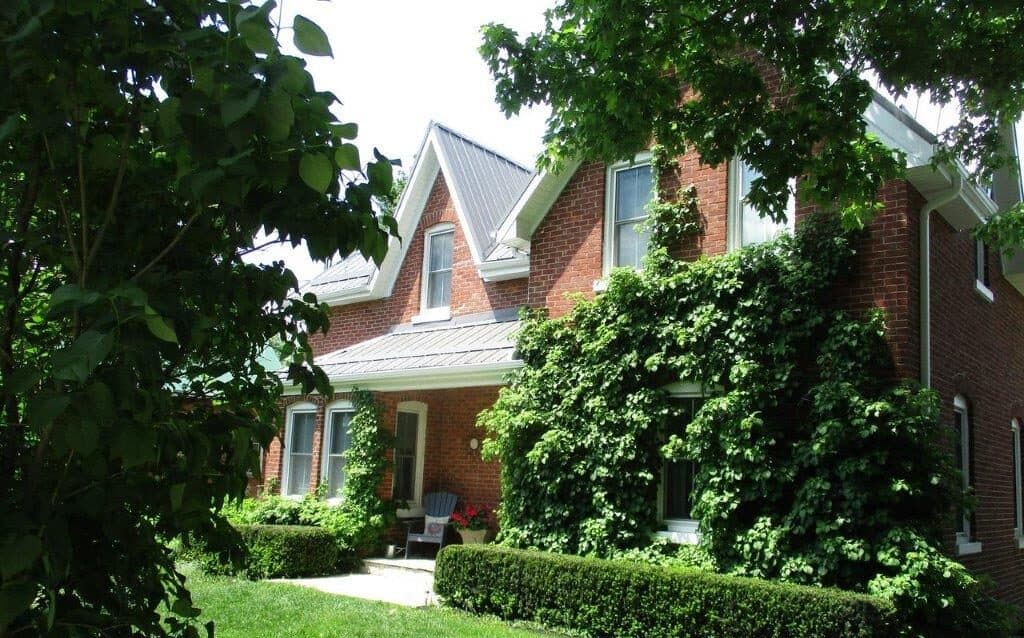
To maintain the original brick of the home while increasing the insulation R value, holes were drilled into the exterior wythe (outer layer of masonry that is one unit thick), and cellulose insulation was pumped into the cavity between the two wythes of brick. The home owner found that with this added insulation their furnace oil use dropped by a third compared to what they would typically expect to use.
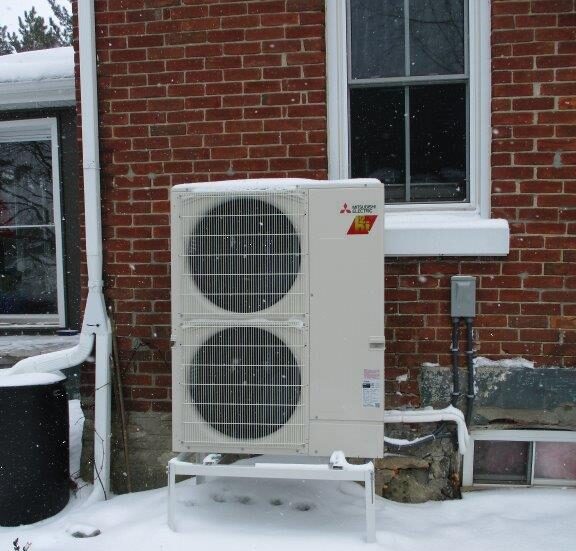
The homeowner then installed an air source heat pump with a backup electric furnace that would be capable of both heating and cooling the house. Removing the oil furnace improves the overall efficiency of the building, and reduces the carbon footprint, but it also lowers the health risks associated with burning fuel and producing CO within the home. These changes alone led to a 61% reduction in the energy consumption in the home.
Before & After
General
|
|
Before |
After |
Building Condition
|
Before
Original insulation in main walls with dated heating equipment |
After
Upgraded wall assemblies with a modern air source heat pump heating and cooling system |
Envelope
|
|
Before |
After |
Attic/Roof Assembly
|
Before
Cathedral ceilings insulated with fiberglass batts *assumed*, Gable attics insulated with blown in insulation |
After
No changes made to attic or ceiling area |
Attic/Roof Assembly Effective Thermal Resistance
|
Before
R-26.95 |
After
R-26.95 |
Wall Assembly
|
Before
2×6 wood frame, 16″ centers, uninsulated wall cavity, brick exterior finish |
After
Wall cavities filled with cellulose insulation |
Wall Assembly Effective Thermal Resistance
|
Before
R-5.3 |
After
R-20 |
Foundation Wall Assembly
|
Before
Crawl space walls: fiberglass batts, Interior foundation walls: fiberglass batts, Foundation header: fiberglass batts |
After
No changes made to the foundation walls, crawlspace or headers |
Foundation Wall Assembly Effective Thermal Resistance
|
Before
R-12.59 |
After
R-12.59 |
Windows and Doors
|
Before
All vinyl, dual pane windows. All but two with Low-E coating. Steel polystyrene core doors |
After
No changes made to windows and doors |
Air Tightness
|
Before
10.08 ACH50 |
After
7.16 ACH50 |
Mechanical & Electrical
|
|
Before |
After |
Cooling
|
Before
None |
After
Air source heat pump 85,500 BTU/h (Cooling COP 3.11) |
Heating
|
Before
Oil furnace 94,000 BTU/h (83% AFUE) |
After
Air source heat pump 85,500 BTU/h (Heating COP 3.07) |
Hot Water
|
Before
Electric storage tank 303L (0.87 EF) |
After
Same as before |
Annual Energy Usage
|
|
Before |
After |
Total Annual Consumption
|
Before
216.83 GJ |
After
83.51 GJ |
Total Net Consumption
|
Before
216.83 GJ |
After
83.51 GJ |
Energy Use Intensity
|
Before
244.84 kWh/m2/a |
After
94.30 kWh/m2/a |
Annual Heating Demand Intensity
|
Before
200.77 kWh/m2/a |
After
39.61 kWh/m2/a |
Annual Cooling Demand Intensity
|
Before
0 kWh/m2/a |
After
7.54 kWh/m2/a |
Annual Electricity Consumption
|
Before
12,244.00 kWh |
After
23,198.00 kWh |
Light and Appliance Energy Consumption
|
Before
10.84 GJ |
After
11.69 GJ |
Space Cooling
|
Before
0 GJ |
After
6.68 GJ |
Space Heating
|
Before
177.80 GJ |
After
35.08 GJ |
Water Heating
|
Before
15.18 GJ |
After
15.87 GJ |
Annual Oil Consumption
|
Before
4487 L |
After
N/A |
Attic/Ceiling Heat Loss
|
Before
10.67 GJ |
After
3.16 GJ |
Main Walls Heat Loss
|
Before
62.23 GJ |
After
5.96 GJ |
Windows Heat Loss
|
Before
28.45 GJ |
After
9.47 GJ |
Exterior Doors Heat Loss
|
Before
1.78 GJ |
After
0.35 GJ |
Basement Foundation Heat Loss
|
Before
17.78 GJ |
After
5.61 GJ |
Air Leakage/Ventilation Heat Loss
|
Before
56.90 GJ |
After
10.52 GJ |
Carbon Emissions
|
|
Before |
After |
Annual Operational Carbon Emissions – Electricity
|
Before
722.40 KgCO2e |
After
1,368.68 KgCO2e |
Annual Operational Carbon Emissions – Oil
|
Before
12,352.71 KgCO2e |
After
N/A |
Total Carbon Emissions
|
Before
13,075.11 KgCO2e |
After
1,368.68 KgCO2e |